Limitations of Personality Tests

I have taken nearly every personality test that exists. The Enneagram, DISC, the Big Five (OCEAN), Myers-Briggs. I discovered the real limits of these tests early in my career as a door-to-door salesman, when my company ran us through one assessment after another and promised each would help us understand how we “tick” and make us better at closing deals. Not one of them ever helped me close a sale.
They described what I tended to do. They never explained why I did it. None of them could tell me why one prospect lit up at the sight of an object on his desk while another shut down completely. In sales, that gap is everything.
That gap is what led me to develop what I now call the John Voris Method, a different way of understanding human motivation and identity. Instead of sorting people into fixed categories, I wanted to find the symbolic forces driving them from underneath. My method rests on will-based reasoning, symbolic interpretation, and phenomenology rather than personality traits or observable behavior alone.
It changed how I understood the people I was talking to. It didn’t just help me sell. It helped me see people for who they actually were beneath the surface and that changed how I worked.
What Personality Tests Actually Measure
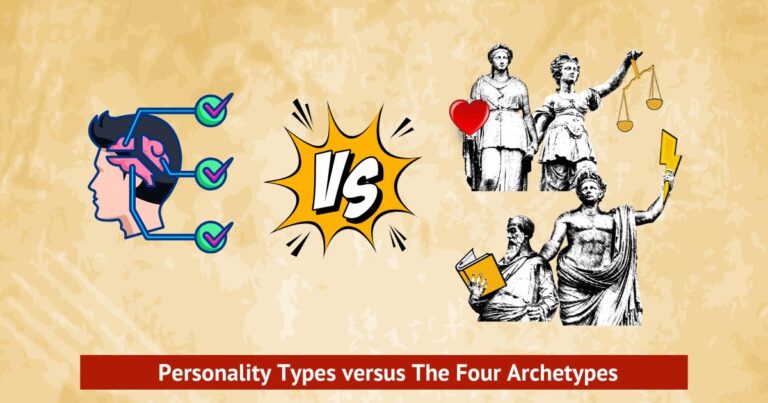
Most profiling systems rely on psychometric testing, sorting people into predefined categories based on patterns in their responses and behavior. Myers-Briggs sorts people into sixteen types built from four dichotomies, like introversion versus extraversion, to describe how they take in the world and make decisions. DISC groups people into four behavioral styles, dominance, influence, steadiness, and conscientiousness, and shows up constantly in workplace communication training. The Big Five measures five traits along a spectrum rather than into fixed boxes, which gives it a more dimensional, research-backed feel. The Enneagram identifies nine core types, each with its own paths toward growth or stress, and leans harder into internal motivation than the others.
Where they struggle is explaining why a person acts a certain way once you get past the correlation between test answers and behavior, especially under stress, during a life transition, or in an environment that contradicts their supposed type.
A Different Starting Point
My method starts somewhere else. It holds that each person carries one dominant Life Theme, Love, Justice, Wisdom, or Power, that quietly governs how they interpret the world and what motivates them.
Rather than stopping at observable traits, my method looks at the objects, environments, and choices a person surrounds themselves with and reads them as expressions of an identity trying to come forward. It draws on phenomenology, praxeology, symbolic interactionism, and neurophilosophy to locate the reasoning structures underneath a person’s decisions, structures that trait-based tests were never built to see.
Three things set this apart. Where profiling systems sort traits of individuals into groups, my method looks for the single motivating structure. Where profiling systems stop at behavior, my method interprets the objects a person keeps around them as a window into a personal meaning structure. And rather than measuring someone against an average, my method checks its conclusions against a person’s actual lived experience, which lets individuality come through while still revealing patterns that make behavior predictable. Reading behavior through “why” instead of “how” uncovers motivation behind actions that look inconsistent when you’re only measuring traits.
Personality profiling can also quietly become a self-fulfilling label. Someone identified as an INTJ might avoid group projects out of a belief that they don’t work well in teams, even when their input would genuinely help. My method sets predictive boundaries instead of locking someone into a fixed outcome. A person whose Life Theme is Wisdom will approach relationships and work through a drive to understand and organize, but how that plays out looks different depending on culture, circumstance, and timing. That gives you both structure to predict behavior and flexibility to account for how differently it shows up across different lives.
Where Each Approach Earns Its Keep
Profiling systems earn their place in fast-moving organizational settings. MBTI, DISC, and the Big Five are genuinely useful for identifying work styles, improving communication, and resolving friction between, say, an introvert and an extrovert on the same team.
My method does something different. Identifying a person’s Life Theme lets an organization place people in roles that align with what actually drives them, which cuts down on turnover and burnout. In hiring and government HR settings, it can reveal whether a candidate is driven by negotiation, which points to Power, research, which points to Wisdom, mediation, which points to Justice, or client relationships, which points to Love. It has also proven useful for people navigating a major identity shift, like retirement or a career change, by clarifying what’s actually motivating them.
Where the Evidence Comes From
Profiling systems typically claim scientific grounding through psychometrics, though they run into real limits: test-retest reliability, situational variability, and cultural bias. The Big Five has the strongest empirical support of the group, but it remains descriptive. It tells you what a pattern looks like without explaining the motivational structure underneath it.
My method comes out of twenty-five years of fieldwork. I tested it directly with more than a thousand people during my years in cold-call sales and watched it hold up again and again, eventually reaching an eight-out-of-ten success rate in an industry where five percent was the norm.
It also stands on a deeper philosophical foundation. Phenomenology, through Husserl, Heidegger, and Gurwitsch, established that we never perceive the world directly. We filter it through personal experience and context, which is exactly how a Life Theme shapes interpretation. Neurophilosophy, through thinkers like Damasio and Varela, backs this up from the other direction: meaning and motivation aren’t purely mental, they’re embodied, which is why my method treats feeling, thought, and action as one connected system. Praxeology, as Ludwig von Mises developed it, treats human action as purposeful and meaning-driven, which lines up with the will-based reasoning at the center of my method. Symbolic interactionism, through Belk and Baudrillard, shows that the objects we own are never just stuff. They’re expressions of identity. And Stephen Wolfram’s work on complexity shows how a small set of rules can generate endless variation, which is essentially how four Life Themes account for such a wide range of human behavior.
My method isn’t built to replace MBTI, DISC, the Big Five, or the Enneagram. It complements them. Those tools remain useful for fast assessments and team communication. My method adds the layer underneath, the motivational structure those tools were never designed to reach.
Selling to the Person Underneath the Type
When I first started applying this in door-to-door sales, I wasn’t testing a theory. I was trying to survive. I quickly noticed that if I could identify a person’s Life Theme, I could speak directly to what actually mattered to them, and that had nothing to do with persuasion tricks. It came down to understanding the inner language behind their motivation.
If someone lived out of the Love theme, I talked about comfort, beauty, and emotional satisfaction. With Justice, I focused on fairness and setting things right. Wisdom types wanted clarity and a logical comparison laid out in front of them. With Power, the conversation centered on achievement and standing apart from the crowd.
The results spoke for themselves. My close rate climbed past eighty percent in an industry where five percent was considered good. More than that, I stopped guessing. I started connecting. That’s the real promise of my method: genuine alignment between who a person is and the decisions they make.
Why This Matters Now
The world doesn’t need another personality test. Most of the ones already out there are useful, but they keep our attention on the surface of behavior without reaching what drives it from underneath. My method goes further, not just as a theory but as something that plays out in daily life.
It doesn’t compete with MBTI or the Big Five. It builds on them. Those systems describe how people behave. My method explains why, across a lifetime of choices rather than a single test result.
For organizations, that means better hiring and stronger teams. For individuals, it offers clarity and a real connection to purpose. And for anyone who has ever wondered why something still feels missing even when life looks fine on paper, it offers a real answer.
Understanding the drive shaping how we perceive, behave, and choose doesn’t just improve performance. It uncovers meaning, and that changes everything.