Will-Based Reasoning and Life Theme: Why People Defend Their Thinking Like It’s Their Identity

One of the most misunderstood experiences in human debate is realizing that you are not actually arguing about the topic. There is often much more going on beneath the surface, something that explains why you repeatedly find yourself in conflict with certain types of people.
You think you’re debating whether a policy is fair, a decision is wise, someone is being compassionate, or decisive action is required. But as the conversation intensifies, something else becomes clear: the other person is not merely defending an opinion. They are defending an identity because, in a very real sense, they are.
This is why certain disagreements feel impossible to resolve, even when the facts seem clearly weighted to one side. It is also why some arguments escalate so quickly. Something deeper than information is being threatened. The conflict is no longer about what is true. It is about the structure of identity expressed through the kinds of reasons being advanced and the values those reasons presuppose.
Ruth Chang, a professor of jurisprudence at the University of Oxford, explores this problem in her essay “What Is It to Be a Rational Agent?” We believe we are reasoning logically, presenting sound arguments supported by evidence. But often we are defending something much deeper.
This is where Chang’s theory of will-based reasoning becomes extraordinarily useful, especially when integrated with Authentic Systems and the four Life Theme Archetypes.
What is threatened in heated disagreement is rarely a fact. It is the foundation of identity, grounded in an archetypal motivational structure. In other words, people defend their reasoning style as if it were their identity because, in a literal sense, it is.
Ruth Chang and the Strange Problem of “Hard Choices”
Chang’s work begins with a simple observation: many decisions in life cannot be resolved by evidence alone. These are not merely difficult choices. They are what she calls “hard choices,” situations in which two options are not clearly better or worse than one another. They are comparable, and that comparability is precisely why the mind struggles.
In a hard choice, evidence does not determine what you should do. The facts do not yield a single correct answer. And yet, you must choose.
In these moments, the will does not simply follow reasons; it authorizes which kinds of reasons will count. We do not merely commit to a fact. We commit to a class of reasons supported by an underlying value structure. We decide which reasons will be authoritative and which values will define the meaning of the choice. This is not irrationality. It is identity formation through commitment.
In this way, our Life Theme is our motivational attractor as a stabilizing identity center, communicating our orientation toward certain values. This anchor is genetic but does not determine behavior; it only tells us what feels right, real, true, and is a good reason for action. In this way, identity is built through will-commitment to certain kinds of reasons, and Authentic Systems shows these commitments are not random but purposeful. Instead, the person is guided by a genetically anchored motivational architecture, which we call the Life Theme Archetypes: Love, Wisdom, Justice, and Power.
Each Life Theme is not merely a personality trait or preference. It is a distinct reason-type—a category of value experienced as existentially authoritative.
- Love treats relational meaning as primary.
- Wisdom treats intelligibility and pattern recognition as foundational.
- Justice treats fairness and proportional correctness as paramount.
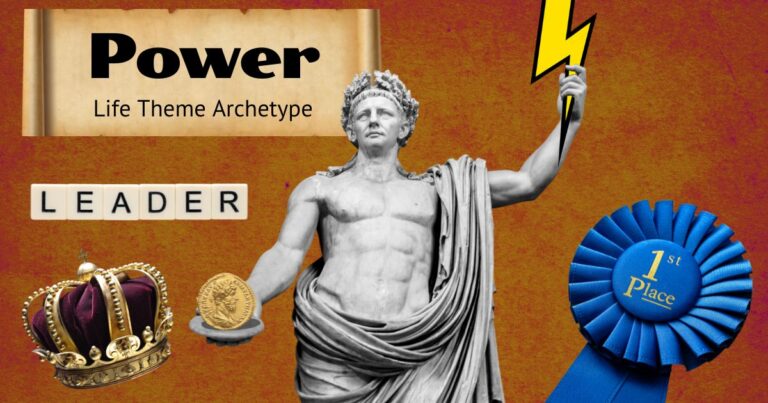
- Power treats agency and impact as decisive.
And once you see this, a startling conclusion follows. Arguments across Life Themes are not disagreements about facts. They are collisions of different identity-defining will commitments. This is why persuasion across themes often fails. You are not trying to change someone’s mind. You are trying to change the kind of reasons they are allowed to be.
Why Cross-Life Theme Arguments Feel So Personal
To understand why conversations become emotionally charged, you must identify what is actually being threatened.
When someone argues from their Life Theme, they are not stating a preference. They are defending the architecture of meaning that allows them to experience coherence. To challenge their reasoning is to challenge the legitimacy of their core reasons. To challenge their core reasons is to threaten their identity.
This is why a logical counterargument can feel like a moral insult. For them, the disagreement is not merely intellectual. It is existential. They are protecting the kind of person they must be in order to remain whole.
Consider common cross-theme conflicts:
- Wisdom vs. Power — Wisdom believes understanding justifies action; Power believes impact justifies action.
- Love vs. Power — Love sees Power as controlling; Power sees Love as ineffective.
- Wisdom vs. Justice — Wisdom believes Justice misses the whole; Justice believes Wisdom lacks rigor.
- Wisdom vs. Love — Wisdom believes Love lacks structure; Love believes Wisdom overthinks.
These are not superficial disagreements. They are structural.
Reasoning Is Identity and Identity Is Will
The modern world tends to treat reasoning as a neutral tool: a kind of cognitive machine that processes facts and outputs conclusions. But Chang’s work reveals something far more human. Reasoning is not merely a method. It is a commitment. And Authentic Identity adds the final layer: the commitments are archetypal. They are rooted. They are identity-forming. This is why people defend their reasoning style as if it were their identity. Because it is.